
Wall Mount Patch Panel
What is a Wall Mount Patch Panel?
In today’s fast-paced digital world, fiber optic technology has become the backbone of modern communication systems. Whether it is high-speed internet, enterprise networking, telecommunication infrastructure, data centers or Fiber-to-the-Home (FTTH) deployments, fiber optic cables ensure reliable and ultra-fast data transmission. However, managing these delicate fiber cables efficiently requires specialized equipment that protects, organizes, and simplifies network maintenance. One of the most important components used for this purpose is the Wall Mount Fiber Patch Panel.
A Wall Mount Patch Panel is much more than just a cable enclosure. It provides a secure location for fiber termination, splicing, cable routing, and distribution while protecting the fiber from environmental damage and physical stress. Designed to maximize space utilization and improve cable organization, these panels have become an essential part of structured cabling systems across commercial, industrial, and residential applications.
This comprehensive guide explains what a wall mount fiber patch panel is, how it works, its construction, different types, applications, advantages, and why UNISOL Wall Mount Fiber Patch Panels are trusted by professionals worldwide.
What Is a Wall Mount Patch Panel?
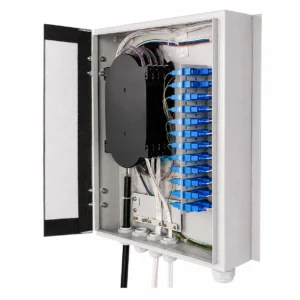
A Wall Mount Patch Panel distribute fiber optic cables is a compact enclosure designed to terminate, organize, protect, and Unlike rack-mounted panels installed inside server racks, wall mount patch panels are directly fixed to walls, making them ideal for locations where rack space is unavailable or limited.
The panel serves as a centralized point where incoming fiber cables are terminated or fusion-spliced before being connected to outgoing patch cords. This organized arrangement simplifies cable management, troubleshooting, maintenance, and future network expansion.
Wall-mount fiber patch panels are widely used in FTTH networks, telecommunications, enterprise LANs, industrial automation systems, CCTV backbone networks, educational campuses, hospitals, and government facilities. Their compact design helps save valuable floor space while providing easy access to fiber connections whenever maintenance or upgrades are required.
Construction and Design Features
The performance of a fiber patch panel largely depends on its design and construction quality. A well engineered wal-mountpatch panel not only protects the fiber but also improves installation efficiency and network reliability.
UNISOL Wall Mount Fiber Patch Panels are manufactured using premium-quality 16-gauge mild steel that offers excellent structural strength. The enclosure undergoes a seven-tank corrosion-resistant powder-coating process, providing long-lasting protection against rust, moisture, and harsh environmental conditions.
The hinged front door allows technicians to easily access internal components without disturbing existing fiber connections. Integrated cable management guides maintain the proper bend radius, preventing signal loss caused by excessive cable bending.
The panels support various industry-standard fiber adapters, including SC, LC, ST, and FC connectors,in both single-mode and multimode configurations. Available in capacities ranging from 6 ports to 96 ports, they accommodate projects of all sizes, from small offices to large enterprise networks.
Many models also feature lockable doors, cable entry points, splice trays, cable clamps, and IP-rated protection against dust and moisture, ensuring reliable performance even in demanding environments.
How Does a Wall Mount Fiber Patch Panel Work?
Theworking principle of a wall mount patch panel First, incoming fiber optic cables is straight forward yet highly effective. enter the enclosure through designated cable entry ports or glands. These fibers are then carefully stripped, prepared, and fusion-spliced or directly terminated onto fiber adapters installed inside the panel.
Thesplice trays securely hold fusion splices,while internal cable management systems organize excess cable length and maintain the correct bend radius. Once terminated, fiber patch cords connect the adapters to networking devices such as switches, routers, Optical Line Terminals (OLT), or Optical Network Terminals (ONT).
Whenever maintenance ortroubleshooting is required, technicians can simply open the hinged front panel to inspect, test, replace, or expand fiber connections without disrupting the restof the network. This organized architecture minimizes downtime, improves reliability, and allows future scalability with minimal effort.
Types of Wall Mount Fiber Patch Panels
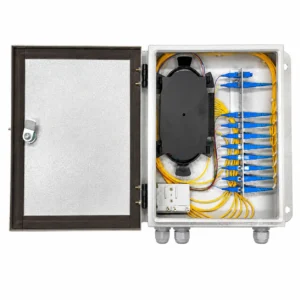
Different networking environments require different fiber capacities. UNISOL offers a wide range of wall mount fiber patch panels to meet varying installation requirements.
6 Port Wall Mount Fiber Patch Panel
The 6 Port Wall Mount Fiber Patch Panel is designed for small-scale installations where only a limited number of fiber connections are required. Its compact size makes it ideal for residential buildings, branch offices, and small commercial applications.
Despite its small footprint, it supports multiple connector types, provides secure cable management, and offers excellent protection against dust and moisture.
12 Port Mini WallMountFiber PatchPanel
The 12 Port Mini Wall Mount Fiber Patch Panel is specifically developed for installations where space is extremely limited. It supports backbone cable termination while maintaining easy access for maintenance and upgrades. This compact enclosure is commonly used inside telecom cabinets, industrial facilities, and small data communication rooms.
12 Port Wall Mount Fiber Patch Panel
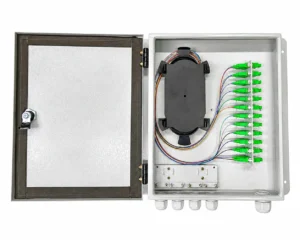
The standard 12 Port model offers increased capacity for medium-sized fiber networks. It supports both fiber splicing and direct termination while providing organized cable routing and long-term fiber protection.
It is widely used in FTTH deployments, educational institutions, commercial buildings, and enterprise networking.
24 Port Wall Mount Fiber Patch Panel
Designedforlargerinstallations, the24 Port panel provides additionalfiber capacity whilemaintaining clean cable organization. It features robust mechanical construction, IP-rated protection, and compatibility with multiple adapter types.
This modelis commonlyinstalled in telecommunications rooms, campus networks, and medium-sized data centers.
36 Port Wall Mount Fiber Patch Panel
The 36 Port version supports high-density fiber connectivity for expanding network infrastructures. Its modular design integrates cable storage, splicing, termination, and distribution into a single enclosure. It is particularly suitable for multi-dwelling units (MDUs), campus environments, and industrial automation systems.
48 Port Wall Mount Fiber Patch Panel
The 48 Port Wall Mount Patch Panel is designed for enterprise-level fiber management where larger fiber counts must be organized efficiently.
It supports fusion splicing, direct termination, and multiple fiber adapter configurations, making it ideal for telecom operators, surveillance systems, and industrial communication networks.
96 Port Wall Mount Fiber Patch Panel
The 96 Port Wall Mount Patch Panel represents the highest-capacity solution in the product range. It accommodates large-scale FTTH rollouts, enterprise backbone networks, telecom central offices, and high-density data communication systems.
Its spacious internal design provides superior cable organization while maintaining excellent protection and scalability.
Applications of Wall Mount Fiber Patch Panels
- Wall Mount Patch Panels are used across numerous industries due to their flexibility, reliability, and space-saving design.
- In FTTH and FTTx deployments, they provide centralized fiber distribution for residential and commercial broadband networks. Telecommunications companies relyon them for backbone connectivity and subscriber management.
- Data centers use wall mount patch panels to organize fiber links between servers, storage systems, and network switches while maintaining proper cable routing.
- Industrial automation systems utilize these panels for secure communication between programmable logic controllers (PLCs), sensors, and control equipment operating in demanding environments.
- Educationa linstitutions and corporate campuses install wall mount panels to connect multiple buildings with high-speed fiber backbone networks.
- Hospitals depend on fiber patch panels to support critical communication infrastructure,vmedical imaging systems, and secure data transmission.
- Security and surveillance systems also use fiber patch panels to connect IP cameras and monitoring equipment across large campuses, airports, railway stations, factories, and smart city projects.
- Power utilities and substations implement fiber patch panels communication links for monitoring, protection, and control systems.
Advantages of Wall Mount Patch Panels
- Oneof the biggest advantages of a wall mount fiber patch panel to establish reliable is its ability to maximize available space. Since the enclosure is mounted directly onthe wall, it eliminates the need for large equipment racks while keeping fiber connections easily accessible.
- Propercableorganization significantly reduces clutter, making installation, maintenance, and troubleshooting much faster. Organized cable routing also minimizes the risk of accidental damageand improves networkreliability.
- These panels provide excellent protection against dust, moisture, mechanical stress, and accidental fiber bending. Integrated cable management systems maintain the recommended bend radius, preventing signal degradation and extending cable lifespan.
- Scalability is another major advantage. Modular designs allow additional fiber connections to be added as network requirements grow without requiring complete infrastructure replacement.
- Wall-mountpatch panels are also highly compatible with industry-standard fiber connectors, including SC, LC, FC, and ST, enabling seamless integration with existing network infrastructure.
- Their durable metal construction and corrosion-resistant coating ensure years of reliable operation, even in challenging industrial or outdoor environments.
- Overall, they reduce maintenance costs, simplify upgrades, improve network organization, and increase the long-term reliability of fiber optic communication systems.
Why Choose UNISOL Wall Mount Patch Panels?
UNISOL Communications has established itself as a trusted manufacturer of fiber optic networking solutions by delivering products that combine durability, reliability, and ease of installation.
UNISOL Wall Mount Patch Panels are manufactured using premium-grade materials and precision engineering to meet industry standards. Every enclosure is designed for efficient fiber management, superior protection, and long-term performance.
The panels support multiple connector types, fusion splicing, cable storage, and structured routing within a single compact enclosure. Their corrosion-resistant, powder-coated finish ensures durability, while hinged, lockable doors provide convenient maintenance and enhanced security.
Available in multiple capacities ranging from 6 to 96 ports, UNISOL solutions can be customized to suit residential FTTH installations, enterprise campuses, industrial facilities, telecommunications networks, surveillance systems, and large-scale infrastructure projects.
With years of expertise in fiber optic communication, UNISOL also provides technical consultation, product selection assistance, and reliable customer support, ensuring every installation delivers maximumperformance and scalability.
Conclusion
As fiber optic networks continue to expand across residential, commercial, industrial, and telecommunications sectors, efficient cable management becomes increasingly important. A Wall Mount Patch Panel provides the ideal solution by organizing, protecting, and distributing fiber optic connections within a compact and secure enclosure.
From FTTH deployments and enterprise networking to industrial automation and surveillance systems, these panels improve network reliability, simplify maintenance, and support future expansion. Their space-saving design, robust construction, compatibility with multiple connector types, and integrated cable management make theman indispensable component of any structured fiber optic network.
Choosing a high-quality solution like the UNISOL Wall Mount Patch Panel ensures dependable performance, long-term durability, an organized cable infrastructure, and simplified maintenance for years to come, making it an excellent investment for any modern fiber optic communication project.